
New Perspectives on Islamic Education in Europe
Double book launch with Maria Lyngsøe and Welmoet Boender.
Over the past decades, the role and use of Islamic education and religious knowledge production in Western Europe have been discussed in both public debate and Muslim communities. With their recent publications, Maria Lyngsøe (University of Copenhagen) and Welmoet Boender (Vrije Universiteit Amsterdam) add new knowledge to this debate. Their studies provide insights on what Islamic education and theology is and looks like in the Western European context across informal and formal spaces of education.
In this ‘double book launch’, the authors will present their studies, which were recently published in Brill’s Muslim Minorities Series. Associate Professor Birgitte Schepelern Johansen and Professor Göran Larsson will provide first responses. Professor of the History of Religion and PI of the project Pious Practices Among Danish Muslims, Catharina Raudvere, will moderate discussions.
Everyone is welcome. After the discussions, we invite you for a small reception.
About the books
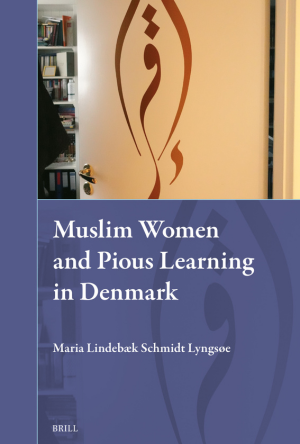 Lyngsøe’s book, Muslim Women and Pious Learning in Denmark (Brill 2026), investigates why Danish Muslim women, like Muslim women around the globe, increasingly search for Islamic knowledge. Based on ethnographic fieldwork, Lyngsøe shows that for the women, the engagement in Islamic educational activities as teachers and students is part of a pious pursuit. Relations to both the divine and to fellow Muslims appear to be equally important for the development of what Lyngsøe calls ‘pious sociality’.
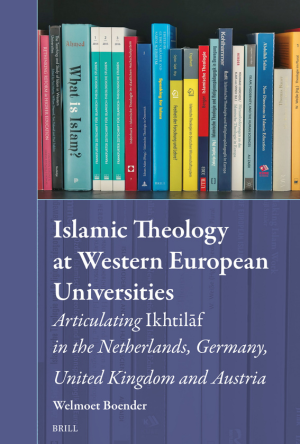 Boender’s book, Islamic Theology at Western European Universities (Brill 2026), puts the focus on the side of the academic knowledge production, surveying academic publications of Islamic theologians in the Netherlands, Germany, United Kingdom and Austria. Boender shows that many Islamic theologians consider religious education in formal and informal settings an essential space for authentic and innovative religious pedagogy and Islamic theology that is open to intra- and interreligious diversity.
Both books discuss the following questions: what religious knowledge is considered authoritative and convincing, and how are sites of Islamic knowledge production legitimatized in the Western European context. Taken together, the books offer much needed insights into understanding of Islamic knowledge in Western Europe.
Bios
Welmoet Boender is Associate Professor of Anthropology of Islam at the School of Religion and Theology at the Vrije Universiteit Amsterdam, where she serves as Vice-Dean of Education of the Faculty of Social Sciences and Humanities. Her interdisciplinary research focuses on the formation of Muslim religious professionals in Western Europe.
Maria Lindebæk Schmidt Lyngsøe is postdoc in Religious Studies at Department of Cross-Cultural and Regional Studies, UCPH. Her work centers on contemporary Islam in Scandinavia with special attention to everyday practices, aesthetics, piety, and subjectivity formation. She is currently involved in the research project Pious Practices Among Danish Muslims.
Birgitte Schepelern Johansen is Associate Professor at Minority Studies Section, Department of Cross-Cultural and Regional Studies, UCPH. Her work explores, among other things, the secular state and culture as the context for understanding the life of religious minorities, the role of knowledge production in the formation and governance of Muslim minorities, and political responses to islamophobia and xenophobia.
Göran Larsson is Professor of Religious Studies at the University of Gothenburg and Guest Professor at the Faculty of Police Work at the University of Borås. His research focuses primarily on Islam and Muslims in Europe, both historically and in contemporary contexts, but he has also published on topics such as religious violence, global conflicts, media studies, and police studies.
Map of South Campus
View directions.
View on map of the Faculty of Humanities - South Campus.
View map of South Campus (pdf).